Rabat - 2026
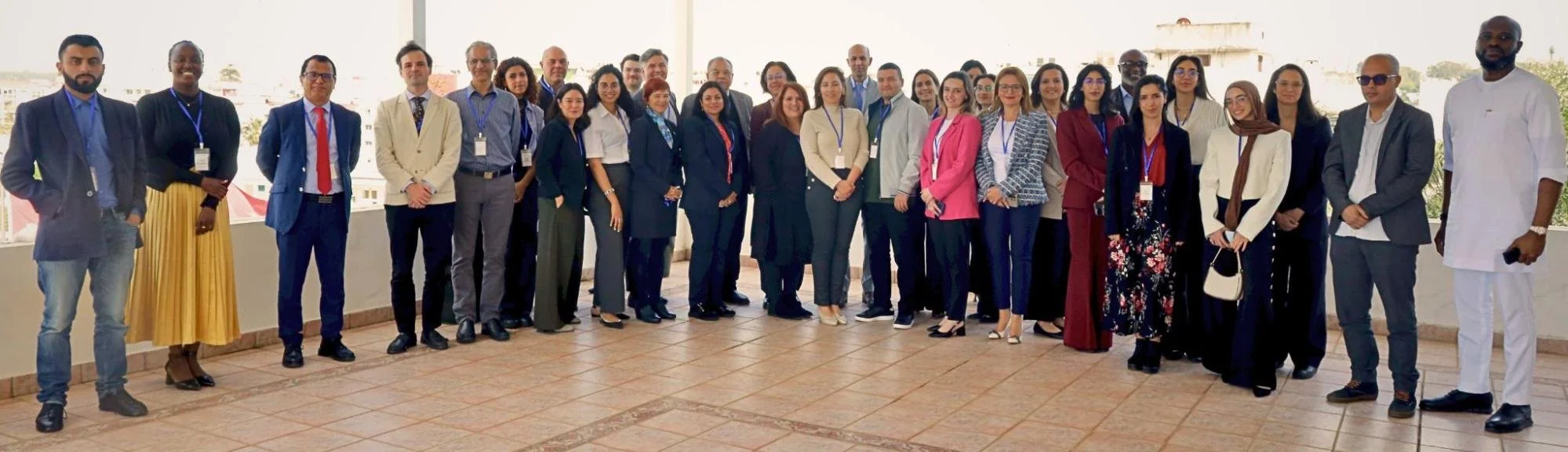
Around 50 policymakers, academics, representatives from international organizations, financial institutions, and civil society gathered in Rabat, Morocco for a day-and-a-half workshop focused on the intersection of trade, climate, and sustainable development in the Middle East and North Africa (MENA) region.
The workshop explored how the MENA region can position itself within a rapidly evolving global trade landscape shaped by climate imperatives, geopolitical fragmentation, and shifting supply chains. Discussions focused on the implications of emerging sustainability-related trade measures, including carbon border adjustment mechanisms, as well as the region’s potential to act as a hub for green industrialization, sustainable trade, and climate-aligned economic transformation.
Participants examined both structural challenges—including regional fragmentation, exposure to external regulatory measures, and financing constraints—and emerging opportunities linked to renewable energy potential, strategic trade geography, and evolving industrial policy frameworks. Across sessions, there was a strong emphasis on the need for better alignment between trade, climate, and financial systems, as well as more effective regional coordination and investment in productive capacity.
The workshop highlighted the importance of moving beyond extractive economic models toward regenerative and sustainability-oriented approaches, while ensuring that global trade rules and climate frameworks remain inclusive and supportive of development pathways in the region.
Conducted under the Chatham House Rule, the workshop brought together a diverse set of stakeholders and aimed to contribute to shaping a more coherent and actionable sustainable trade agenda for the MENA region. It was organized by the Remaking Trade Project, in collaboration with The Imal Initiative for Climate and Development (IMAL), Université Mohammed V de Rabat – Faculté des Sciences Juridiques, Économiques et Sociales (FSJES-Souissi), the Euro-Mediterranean Economists Association (EMEA) and the Forum on Trade, Environment & the SDGs (TESS).